I feel it was only yesterday that I sat down with a coffee and a laptop and decided to talk about backup Internet in a business context. Turns out it was the 26th of December - Yep Boxing Day - because when you're running a small business there's never really a time to stop. If you're dependent on the Internet for business operations (which is almost everyone nowadays) then your Internet connection needs to work as hard (and as tirelessly) as you do.
At secureAF we share our own solutions and we share customer stories (with permission). We share what works, and today I'm sharing what hasn't.
Back when I wrote that December 2025 post, Starlink was my ultimate backup solution. I had a 5G connection to handle connectivity "dips" and Starlink as my break-glass solution for when things really go wrong. As I'm writing this post, it's the 27th of June. My Starlink subscription ends today.
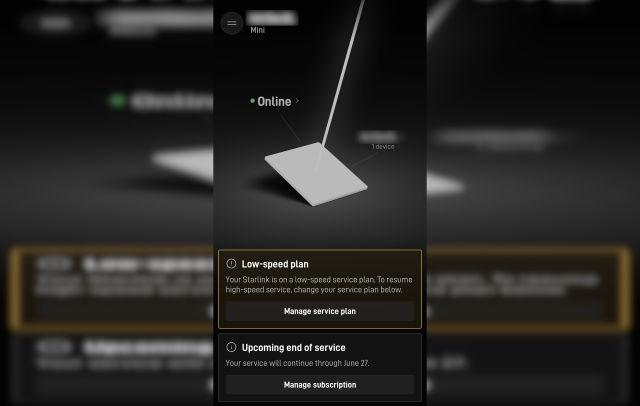
The Standby Timeline: A History of Moving Goalposts
I value stability in the services my business relies upon and Starlink has been anything but. I don't mean stability in the "is my Internet stable" sense. I mean it to describe their behaviour.
- Before August 2025, if you had a Starlink Roam plan, you could pause it when it wasn't needed - dropping your cost to $0 and un-pause it when required. A perfect backup option.
- Then in the August > September 2025 time-frame "Standby Mode" replaced pause. They killed pausing but offered this as an upgrade. Yes, you suddenly had to pay $8.50 AUD for the privilege of standby mode but you got a trickle of data (500Kbps) which is just enough to send and receive an email. Slowly. Without attachments.
- Come March 2026, Starlink ended "In-Motion" mode. This was a hit to users who rely upon Standby mode for their caravan or on-the-road travelers. In my case the dish stays connected to my roof, ready to leap to action so it's not an issue. If I take it on the road with me, it's because I've gone camping and I promised a client I'll stay on half-days while I'm remote. An annoying change but immaterial to my use case.
- Finally we hit May 2026 - Standby mode is jumping from $8.50AUD to $15AUD. While $15 isn't going to bankrupt a business, a sudden near-doubling of the price for a dormant service proved just how aggressively Starlink could alter OPEX without warning.
Let that settle in for a moment... In less than 12 months, Starlink took a free feature, started charging for it, stripped away its mobility, and then nearly doubled its price.
When the May announcement came in I collected my thoughts and re-considered my options. Starlink is proving far too volatile. It's time to look for a better option.
Rethinking the Stack: Enter Launtel and Dual NBN
When the price hike was announced, I took a step back to reconsider our options. We needed a backup strategy that offered commercial predictability without sacrificing technical resilience.
Enter Launtel. We want to be completely clear: secureAF is not sponsored by Launtel. We have no relationship with them other than as customers. We pride ourselves on remaining strictly vendor-agnostic so we can recommend what genuinely fits your business. However, Launtel offers a highly unique feature that solves the backup dilemma perfectly: pay-by-the-day NBN plans.
Instead of paying an ongoing monthly fee for a connection we rarely use, we can leave a secondary NBN service paused and ready to activate the moment it's needed.
To achieve ultimate flexibility, we actually expanded our strategy. To save money and increase reliability, we now utilise four distinct internet pathways.
Four-Tiered Connection Strategy
Here's the thing that will really blow your mind. To save money I now have four Internet connections, one up from my previous three. Let me explain:
- My primary ISP is still my primary ISP. NBN via FTTP, monthly charge, everything you're familiar with.
- My secondary ISP for "dips" is still a 5G router. The fact I can purchase a yearly data plan and leave it to sit there still makes this ideal for brief outage moments and a poor choice for sustained outages.
- My third ISP is Launtel. It's a second NBN connection delivered by FTTP. It shares the same NTD as my primary connection. If my ISP is having a sustained outage I can activate my Launtel connection. If I have a project that's really taxing my internet connection, I can even activate Launtel in load-balancing mode with my primary ISP and increase my available bandwidth for a short duration.
- My fourth ISP is Starlink. Yes you read that correctly.
The reality is My first, second and third connections are great except for the scenario where someone digs up the fibre cable in my street. Starlink still has a role to play, but I have diminished it as much as possible. At midnight tonight the dish is no longer activated via Standby mode and I'll take if off the roof tomorrow so it's not longer drawing power. I have decided with my alternative connections ready to go, I'm willing to eat the time it takes to unpack and mount the dish.
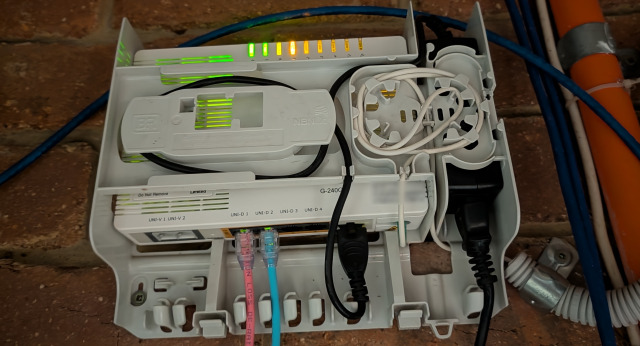 In the photo above, the pink cable is my primary ISP and the blue cable is Launtel. They share the NTD, they share the fibre. Unfortunately it's the greatest weakness to this solution.
So that's a bit of effort to remove Starlink, only to keep using Starlink.
The reality is I'm trying to reduce my reliance on Starlink as a business, but I'm aware that until someone offers a competing LEO service or an Australian carrier offers a competitive alternative via 5G they'll still have a role to play.
I'd stick with them if it weren't for the moving goal posts:
- Unpredictable Operating Costs (OPEX): As a small business, I want accurate forecasting. When a provider nearly doubles the cost of a standby service overnight, it sets a worrying precedent.
- Shifting Terms of Service: A solid Business Continuity Plan (BCP) needs a foundation that doesn't move. Starlink has a habit of abruptly altering the rules; such as changing what you can and can't do on their Standby and Roam plans, or tweaking how data caps are enforced.
- A Consumer-First Mentality: Many of Starlink's sweeping changes are clearly aimed at managing their massive consumer base, like seasonal caravan travellers or heavy home streamers. Unfortunately, SMEs using the service for critical redundancy end up caught in the crossfire.
- The Unnecessary Administrative Burden: As a business decision-maker, your time is valuable. You shouldn't have to constantly monitor your backup internet provider's news updates just to check if your service has been re-priced or restructured.
Addressing the contradictions
How do two ISPs on the same fiber help, isn't a backhoe digging up a cable in the street the most common "last mile" failure mode? Statistically I believe that to be true, however in the time I've been here I've never experienced the local cable cut. I have however experienced ISP level routing or authentication issues, so the inclusion of Launtel gives me an alternative for what I've experienced as a failure mode without needing to reach for Starlink.
You're disconnecting the Starlink, didn't you add a massive burden duing a business outage? Yes I did. This is a business choice and any other business owner would need to weigh up a similar set of options. In my original article, I spoke of Starlink acting not just as a redundant connection, but as a means to keep the business operating when remote. I have decided to tip the balance towards Starlink as a portability solution. Keep in mind this solution isn't going to be for everyone, I'm super technical so putting the panel back on the roof and firing up the service is a trivial matter. The "micro cost" optimisation I'm making could be bad value for some, a decent business continuity solution needs to consider how the solution will actually work not just the monthly cost of backup services.
You already pay for 5G as a standby, isn't this a lot of effort to shave $15 per month? Yes it is a lot of effort to shave $15 per month. But that's not what I'm trying to protect against here. Firstly the 5G, if you pause to think on it, it's actually my primary backup. Both Launtel or Starlink are the "long term" backups. The design is inspired by the way many traditional data centres operate - they have battery backup to handle power fluctuations and short-term power loss events but if an outage looks like it will take too long it's time to fire up the generator because batteries just won't last that long. I use 5G the same way, it's always on and it's a diverse connection to eat small connectivity dips but the moment an outage is more than a few minutes to a few hours I'll be looking at one of my other options. Now here's the real kicker - I'm not really trying to save $15 per month. I've identified Starlink's tendency to chop and change their policies as a liability so I'm simply trying to minimise my dependency on them to whatever extent possible.
Doesn't resuming a Launtel connection still have a lag because NBNco deactivates the port? Yes it does. Again this is why 5G is an important piece of the puzzle. Just like my analogy above, the battery is there so servers keep running while the generators spin up to operational capability - same thing with my redundant internet options.
Closing thoughts
Unfortunately we live in the era of enshittification, where the game plan for large tech providers is to release a good value service, wait until businesses and consumers alike are hooked and then maximise the squeeze they can get from their customers. Your only real defence is to keep your ear to the ground and be ready to move once the value evaporates. It's for this reason my backup strategy was highly modular and easy to shuffle around. If you need help getting the same flexibility and resilience into the heart of your business, contact secureAF for a free consultation.
Update one week later...
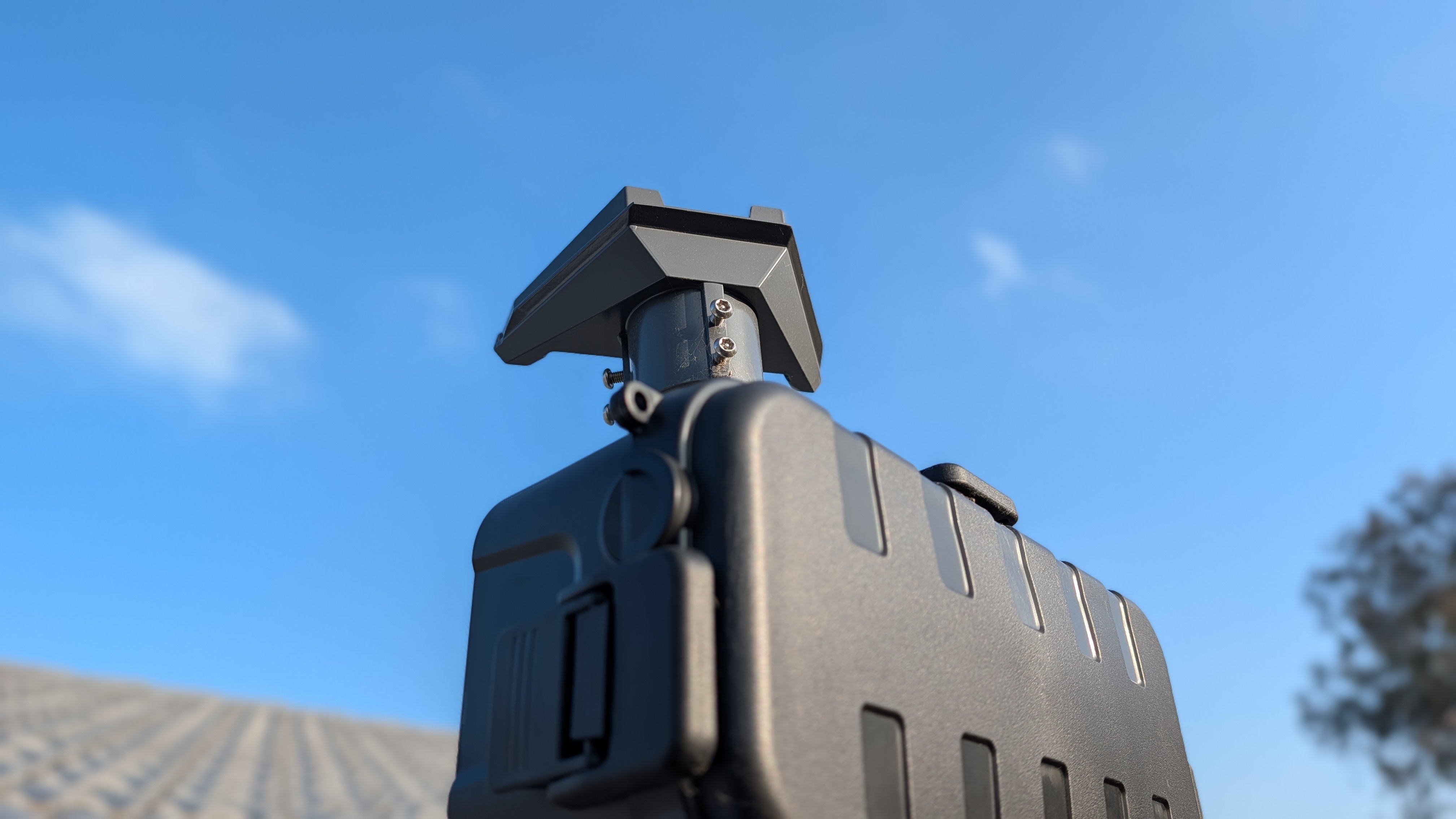
My Starlink mount now sits empty and waiting for a dish, the cables have been capped off and stored in the waterproof utility box I mounted on the pole (remember exposed metal corrodes, if you're looking at a similar semi-permanent setup cable storage is a critical consideration). I find it symbolic, a representation of the fact that with a little pre-planning and a flexible mindset some things can still remain within our control.